InfoSec / Cyber

Error

Please login first

Visualizing cybersecurity planning, identifying weaknesses, and building a proactive security posture.

A well thought-out plan gives you a structured approach to improving your security posture, identifying weaknesses, and ensuring a rapid response when an incident occurs. The goal is moving from reactive panic to proactive preparedness, and that starts with understanding exactly where you stand today, before building the plan and risk register that gets you further.
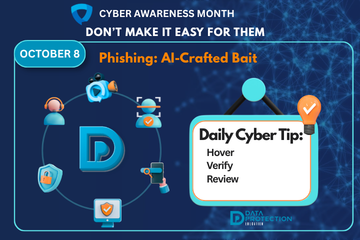
Illustrative image depicting phishing, cyber attacks, and data security risks for online users.

Phishing remains one of the most prevalent and effective cyberattack methods, tricking millions into compromising their data every year. These deceptive messages, often arriving via email, text message (smishing), or phone call (vishing), are designed to look legitimate. They aim to trick you into revealing sensitive information like login credentials, credit card numbers, or personal data, or to click on malicious links that install malware. They may also be the start of a more complex cyber attack as a way into a system.

Digital representation of data security, highlighting shared responsibility for cyber threats in schools and trusts.

Cyber security can look like an IT problem, something for someone else to handle. It isn't. DPE has created as set of resources as a starting point to help you work out, role by role, who is accountable, who does the work, who should be consulted, and who just needs to be kept informed. Almost everyone in a trust or school appears somewhere on that list. That's the whole idea behind this year's theme: don't make it easy for them. Attackers rely on someone assuming it's not their job.

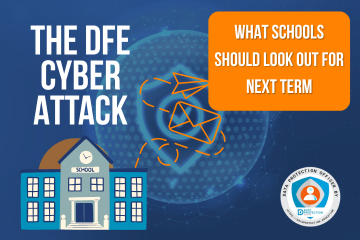
Digital graphic symbolizing a cyber attack and data breach at the Department for Education (DfE).

The Department for Education confirmed that hackers have accessed its internal helpdesk and the Turing Scheme portal, taking more than 600,000 records. Contact details belonging to headteachers, senior school leaders, government officials and university staff were among the data taken, and some of it has since appeared on the dark web.

Understandably, this has caused a lot of anxiety across the sector and, predictably, a lot of speculation. Was this preventable? Should the DfE have done more? Who's to blame?

Department for Education's Cyber Security Hub graphic, showing digital protection for schools against cyber threats.

Cyber attacks on schools are no longer a distant threat. The Department for Education (DfE) has just launched a dedicated Cyber Security Hub to help schools navigate this growing danger, and as a school leader, it's worth understanding exactly what it offers and why it matters.  If you were at our conference in February you were lucky enough to see a preview of the tool!

  1. World Password Day
  2. The Cyber Security Breaches Survey 2025/2026 - Key Advice for Schools
  3. Holiday Cheer or Cyber Fear? : Essential Pre-holiday Checks
  4. What is the Stryker cyber attack and why should schools be wary?
  5. Cyber Alert: Surrey and Sussex Schools Targeted by Phishing and Ransomware Attacks
  6. Is your IT Support Provider Compliant?
  7. The Government Cyber Action Plan
  8. Shareable Snippet: Be Cyber Ready
  9. What does the technology in schools survey tell us?
  10. Four London councils hit by cyber attacks - Hackney, Westminster, Kensington & Chelsea, and Hammersmith & Fulham
  11. IT Support Standards for Schools and Colleges Guidance (DfE Digital Standards)
  12. Time's Ticking: Windows 10 support ends in October 2025!
  13. Nursery Cyber attack
  14. The NCSC Cyber Assessment Framework
  15. The Classroom's Dark Side: Cyber crime from the Classroom
  16. The Latest Cyber Threat: The "Murky Panda"
  17. Social engineering + impersonation = Fraud ≡ cyber deception
  18. School cyber attack: Framlingham College, Suffolk
  19. Getting caught in the Scattered Spider web
  20. A Wake-Up Call for Cyber Vigilance - Danger in the Threat Landscape for Everyone
  21. Apple removes its highest level data security tool from UK customers
  22. Effectively communicating during a cyber incident
  23. Safeguarding Identity in Microsoft 365: Protecting the UK Education Sector Against Cyber Threats
  24. How does the recent global IT outage affect me?
  25. King's speech introduces new bills in relation to cyber security, smart data and digital information
  26. Free short cyber training for staff
  27. Children's mental health data leaked after a cyber attack
  28. Cyber Incident Review: The Benefits
  29. Cyber attack on a University
  30. Kent Councils Data Breach
  31. Phishing attacks targeting schools - alert from City of London Police
  32. Update on Advisory for Rhysida Ransomware
  33. The Crime in a Cyber Attack and a Data Breach
  34. Learning from Data Breaches
  35. Windows 11 security ineffective against attacks on old devices
  36. International Counter Ransomware Initiative 2023 Joint Statement
  37. Top Ten Cyber Security Misconfigurations
  38. ICO Reprimand: company suffered a ransomware attack
  39. The UK Online Safety Bill becomes an Act (Law)
  40. The importance of software updates (PaperCut vulnerability and Rhysida ransomware)
  41. Ransomware, extortion and the cyber crime ecosystem
  42. Cyber Resource: The Cyber Resilience Centre Group
  43. Email and Security: ICO recent guidance
  44. What to do in the event of a Cyber Attack
  45. Cyber Crime: AI Generated Phishing Attacks
  46. Cyber Attack: Exam Boards
  47. VICE SOCIETY - Ransomware attacks on schools
  48. Be Cyber Aware: USB Sticks
  49. Cyber Insurance in the Public Sector
  50. Types of Cyber Attacks: DDos Attack (Microsoft DDoS Attack in June)
  51. Cyber Attack: Leytonstone School
  52. Be Cyber Aware: Firewalls
  53. Be Cyber Aware: Cyber attacks and transparency. A no blame culture
  54. Cyber Attack: Dorchester School
  55. Be Cyber Aware: Why regular software updates are important
  56. Cyber Attack: Wiltshire School
  57. Keeping your IT systems safe and secure
  58. Why we recommend using PIN codes on printers
  59. Types of Cyber Attacks: DDoS Attacks
  60. Types of Cyber Attacks: Phishing
  61. Types of Cyber Attacks: The Insider Threat
  62. Why your data is profitable to cyber criminals
  63. Types of malware and how they are linked to data protection
  64. How a school fought back after a cyberattack
  65. Types of Cyber Attacks - Credential Stuffing
  66. January Cyber update - How Can Schools Help Prevent Cyber Attacks?
  67. The Education sector now at highest risk of cyber attacks
  68. Cyber Attacks
  69. Emails – good practice and minimising the risk of a data breach

Search